We use cookies on our website.
Some of them are necessary for the functioning of the site, but you can decide about others.


This year, our Software Team built the internship around a specific technical challenge. Five student teams received technical documentation, AI tools, mentors, and ten days to develop a solution.
It started with curiosity.
From the beginning, the work was very practical. There were no model exercises or tasks created just for practice. Instead, the students worked with materials that are used in real projects: EPLAN documentation, sample manuals, PLC programs, HMI applications, and AI tools.
Then the clock started ticking.
The students worked on two topics:
Ten days is not much time. The teams had to quickly understand the materials, divide the work, and start testing what could work.
They worked with documentation, tested different approaches, used AI tools, and gradually built their solutions.
At the end, it was not enough to simply describe what they had tried. Each team had to show a working output and defend why they chose their particular approach.
The final presentations were one of the strongest moments of the entire internship.
The students presented their outputs to mentors and other software experts who took part in the evaluation. They had to explain how they thought about the assignment, why they chose a specific path, and how their solution could be developed further.
For the students, this was not just the final step of the project. It was also valuable practice in self-presentation: showing their result, answering questions, and talking about their own work in front of people from the industry.
And perhaps that is what made the presentations so strong. They were not only about completing the assignment. They also showed the students’ satisfaction that their teams had managed to get their solutions running and demonstrate where they could go next.
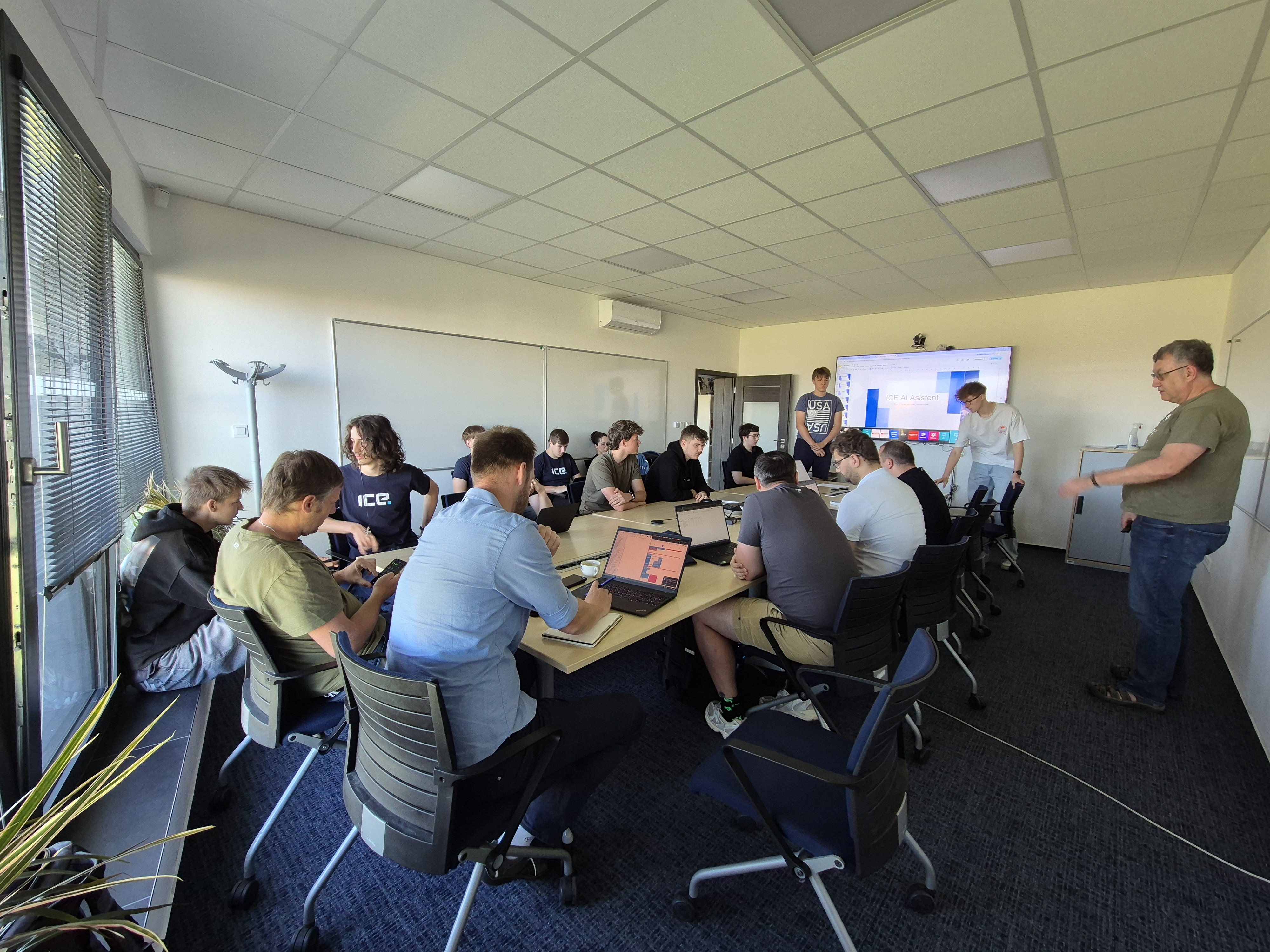
The result? Five functional beta versions.
Not finished products. Not fully tested solutions. Rather, they were early working implementations based on data from the Testing Cell project, showing that the chosen direction could work.
The next step will be to review everything, test it further, and decide what makes sense to develop next. The goal of the internship was not to deliver a final tool. The goal was to find a path. And that was achieved.
And how did the students see it?
“The team was friendly and willing to help. The internship was useful and valuable — I learned new things. Working in a team was great. We won the final team competition, so I was completely satisfied.”
Jiří C.
“The internship pleasantly surprised me by how much effort the company’s employees put into the assignment and communication with us. Not only was the work engaging and educational, but we were also treated like company employees.”
Samuel G.
“I’m glad I had the chance to try direct programming and develop an application according to my own ideas. I also really appreciated the mentors’ approach — they were very helpful.”
Pavel H.
After the final presentations, we ended the internship with a barbecue. It was a nice closing moment after ten days that had energy from start to finish. We will meet some of the students again soon, perhaps at our Automation Camp or during a future internship.
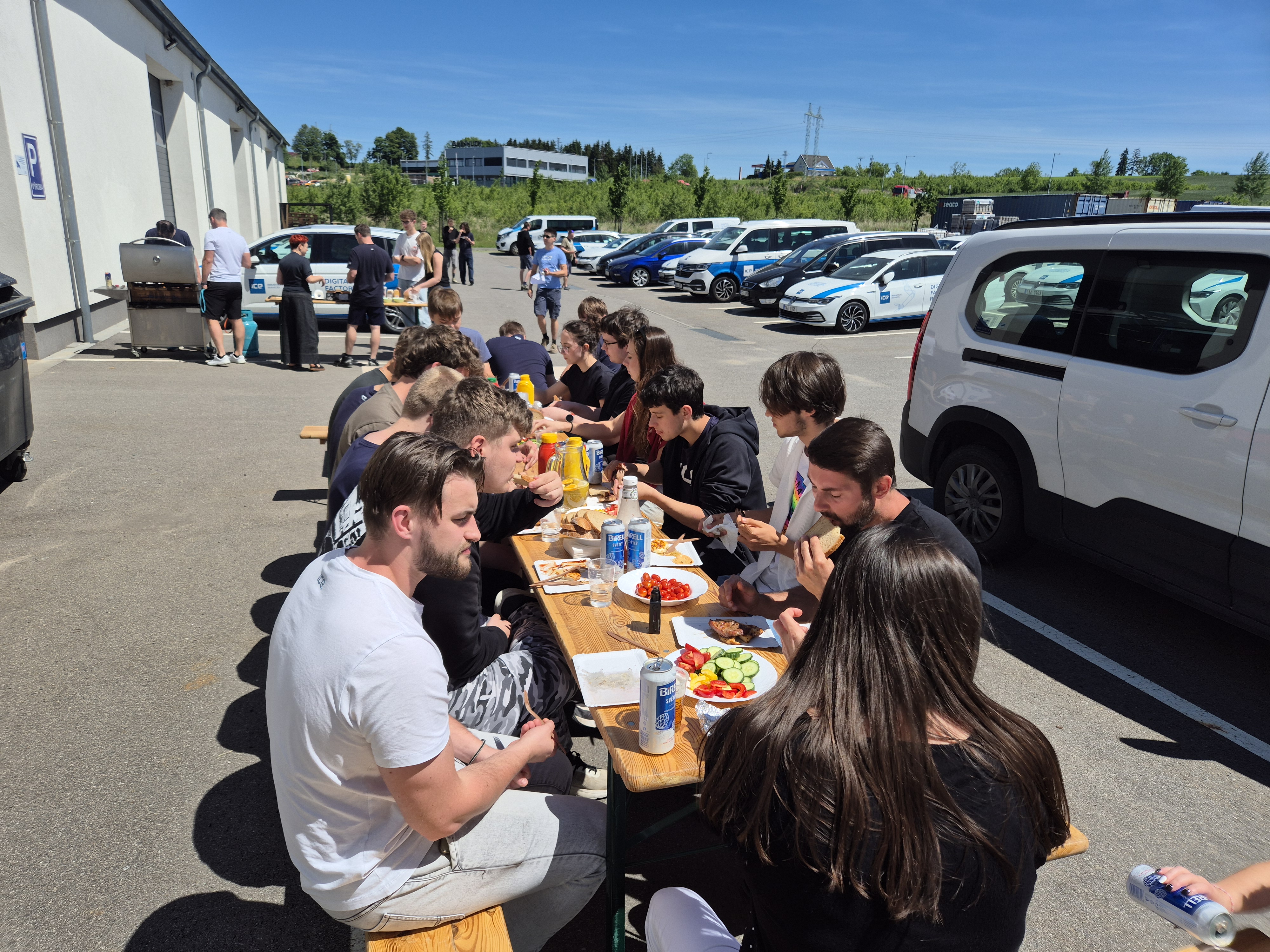
Why did the whole thing work? Because people came together and gave it their time, energy, and ideas.
Vojtěch K. brought the idea and the topics. Karel V. and Filip K. were available to the teams as mentors, and Kateřina Č. kept the whole event organized together with Zbyněk B., who also provided technical support.
And the students? They gave it their all.
Without them, ten days would not have produced five functional beta versions. And it certainly would not have become an internship we can build on.